The Mother Complex – Fatherless Era
The Mother Complex - Fatherless Era
In our epoch a profound fatherlessness reigns – not merely physical, but above all symbolic. The heavenly Father, that instance of boundary, orientation, and supreme authority, has been dethroned. In His place rises an overpowering maternal matrix, reinforced by currents of modern feminism, drawing society into collective regression. The mother complex unconsciously binds the soul to the sphere of the Great Maternal: nurturing and enveloping, yet at the same time devouring and paralyzing when no conscious separation takes place.
The relationship with our mother shapes our entire lives, as it is our first psychological and physical predisposition. But what happens when this early connection feels like an invisible shackle in adulthood? The term "mother complex" is often bandied about in everyday language—mostly to disparage the classic "mama's boy." But there is far more to this phenomenon than a cliché. We understand it to be a powerful bundle of internalized feelings, expectations, and unconscious patterns. These often subtly influence our self-esteem, our choice of partner, and our ability to form relationships throughout our lives.
Without the polarizing Father – the principle of Logos, of law, of leading forth into the world – the human being remains trapped in the womb. Men and women alike become eternal children: the Puer Aeternus and the Puella Aeterna, dependent on maternal affirmation, state welfare, or a partner as substitute mother.
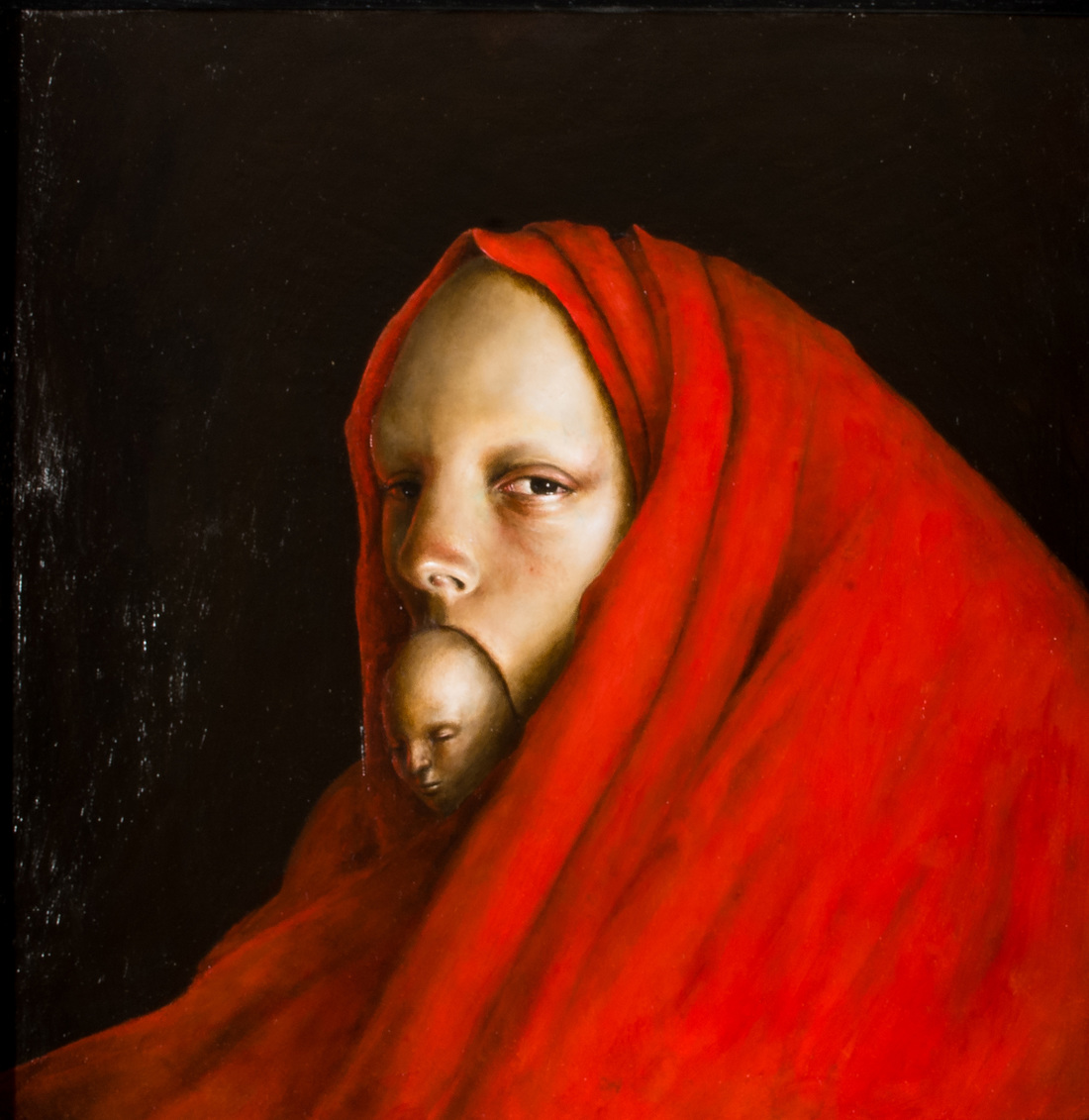

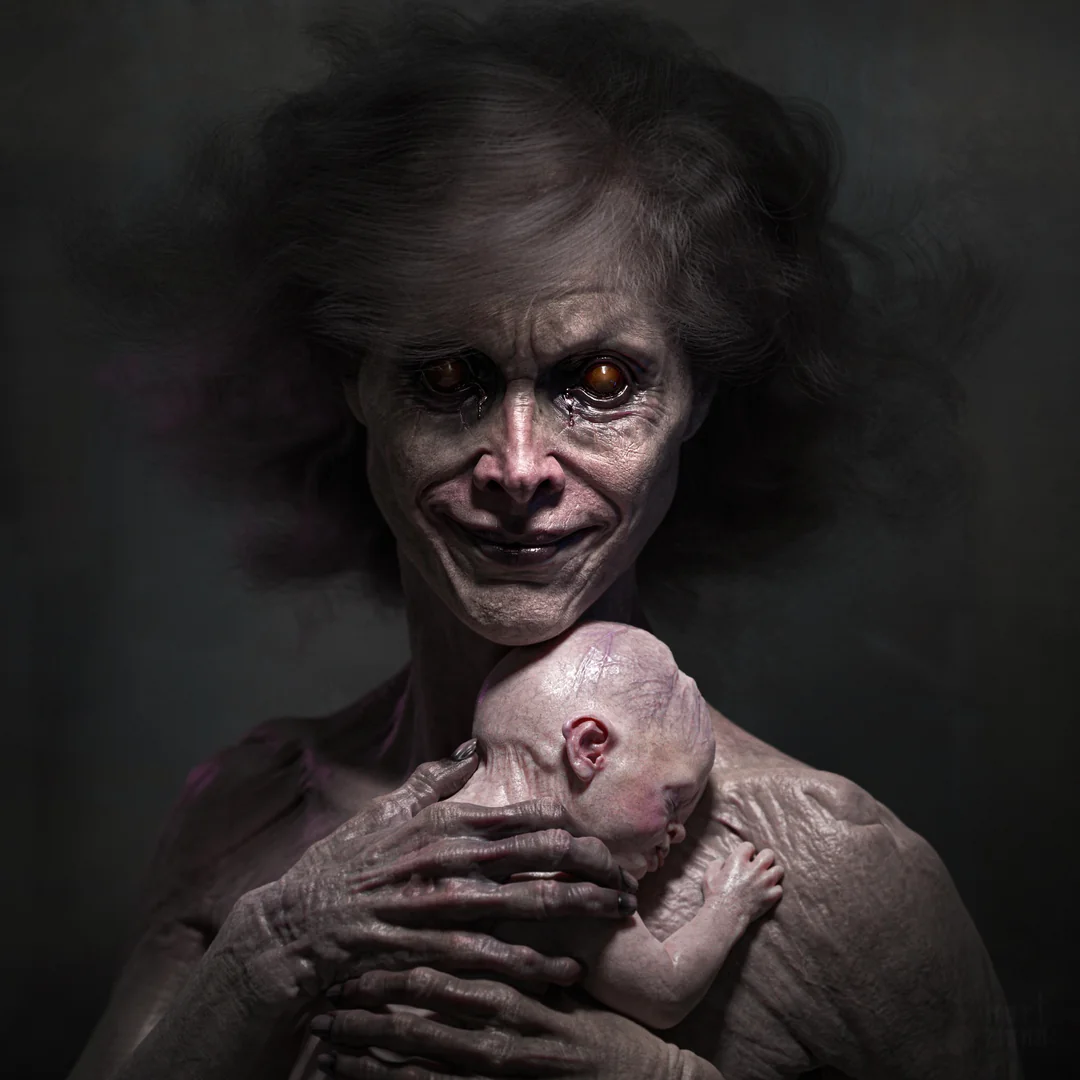

A conscious attitude or action inevitably creates an opposing force in the unconscious to maintain psychic equilibrium. As long as you don't make the unconscious conscious, it will determine your life and you will call it fate. – Carl Gustav Jung
The Great Feminization - The Mother Complex
Feminism and the ensuing wokeness have accelerated this process. By indiscriminately devaluing the masculine and portraying the father as superfluous or even dangerous, it deprives the soul of the necessary counterpart. The consequence: a feminization of the soul. Women unconsciously seek either to surpass their own mother or to repeat her; men flee either into infantile dependence or into overcompensating hardness, never attaining true maturity.
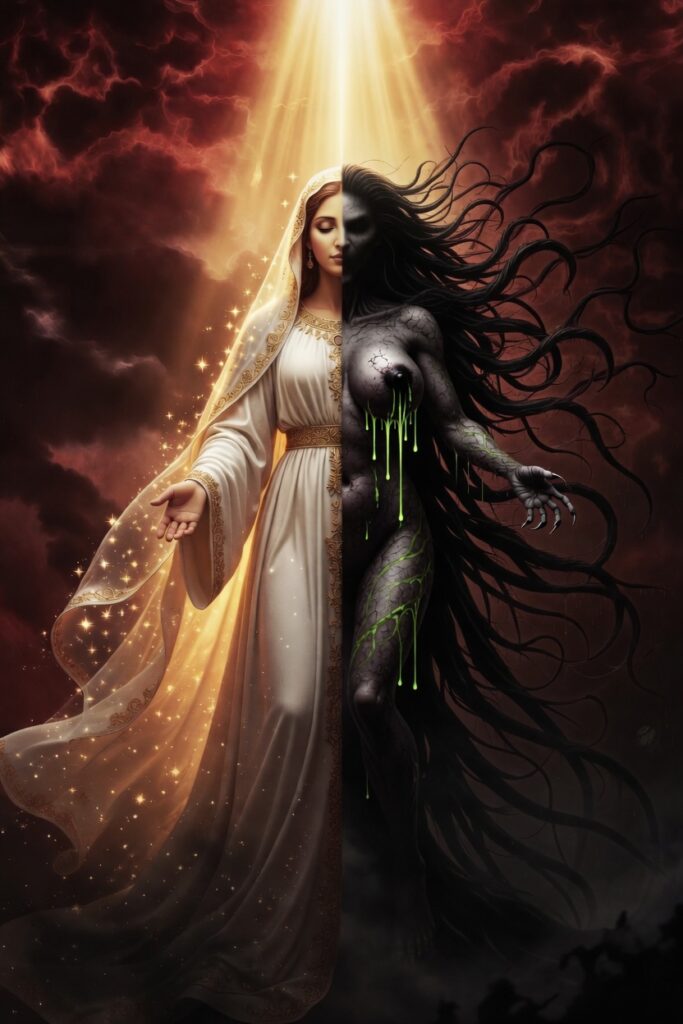
The mother complex is not a purely personal problem arising from malicious intent. Every child begins life unconsciously identifying with their mother. Only with the awakening of ego-consciousness do we painstakingly separate ourselves from this psychological foundation. If this separation fails, a part of our psyche remains trapped in the archetype of the mother. This archetype has always possessed a fundamental dual structure within our soul:
- The light, benevolent side: It represents protection, nurturing, the creative earth, security, and wisdom.
- The dark, devouring side: Mythologically deeply rooted in figures like the ancient Hecate or the Indian goddess Kali, it symbolizes the uncanny, emotional overpowering power, control, and the abysses of the unconscious.
The Archetype of the Mother
The archetype of the mother is a universal, primal form of the feminine, anchored in the collective unconscious. She embodies nurturing kindness, protection, fertility, and wisdom, but also the chthonic depths of the mysterious, the devouring, and the destructive. As an ambivalent force—loving and terrible mother—she is the foundation of all maternal experience and leads to individuation when consciously integrated.
The mother archetype (often referred to as the Great Mother) is the primordial image of the matrix: the origin of life, security, and transformation, but also of dependence, regression, and the abyss. She appears in myths as a goddess, nature, earth, or the Virgin Mary—dualistic as both a blessing and a devouring force. Her integration enables maturation; her repression binds the soul in eternal childhood.

The Two Faces of the Mother Complex
A mother complex develops when the actual behavior of one's own mother unhealthily activates these archetypal forces in the child. Depending on how this initial attachment unfolded, psychology today distinguishes between two forms (negative and positive):
The Death Mother
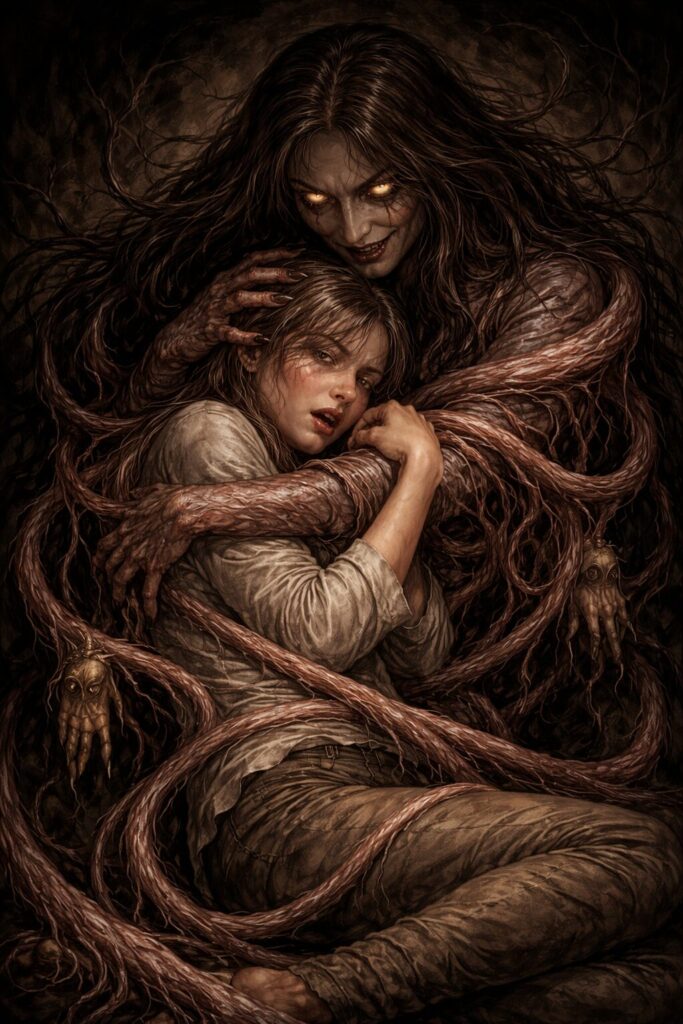
- Overwhelmed by Closeness: Here, the mother was often over-idealized or acted extremely overprotectively ("helicopter parent"). A strong, unconscious defense mechanism (called apotropaicism in psychology) leads to the mother being portrayed flawlessly in order to ward off the unconscious fear of her all-consuming power. Those affected were indeed pampered, but kept psychologically dependent. This is how the death mother emerges—not as a real woman, but as an archetypal pattern: she promises security, yet she stifles independence. Both genders remain trapped in dependency—on emotions, on institutions, on collective illusions of total security and endless well-being. The negative mother complex manifests as entanglement: possessiveness, emotional suffocation, regression into infantilism, or defense against the feminine (in sons: fear of women, hatred; in daughters: loss of self). It inhibits individuation, binds in dependency, and evokes the death mother—that force which devours development. Without conscious detachment and turning to the heavenly Father, the soul remains trapped in darkness.
- The wound of rejection: The mother was emotionally distant, cold, demanding, or unpredictable. The child experienced the dark, threatening side of the archetype. It grows up with the profound feeling of having to constantly earn love and the right to exist through conformity or achievement.
The Positive Aspects of the Mother Complex
A positive mother complex bestows security, compassion, creativity, and an instinct for nurturing. It nourishes life, strengthens trust in the world, and enables deep emotional bonding. With conscious integration, it becomes a source of love, wisdom, and spiritual elevation—leading to the union of animus and anima and to healthy polarity in relationships and family.


The Son's Mother Complex
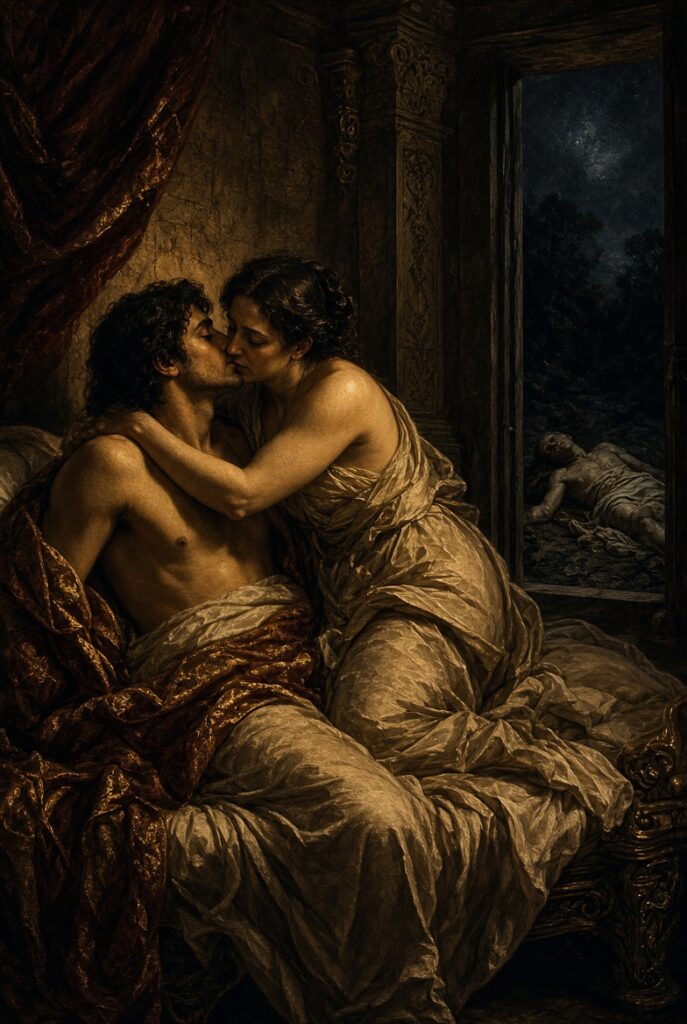
In a son, the mother complex often unconsciously binds his heterosexual libido to the mother imago. Positively, it can bestow sensitivity and creativity; negatively, it can lead to homosexuality, Don Juanism (the search for the mother in every woman), impotence, or perpetual dependency. The unresolved complex keeps the man under the spell of the Great Mother and prevents him from encountering his own anima.
- The Eternal Youth (Puer Aeternus): Men with an overprotective mother often find it difficult to emotionally detach. They remain like children inside and unconsciously seek a partner who takes on the role of a "substitute mother," manages daily life, and relieves them of responsibility.
- Fear of Commitment as a Protective Mechanism: If the mother was controlling or possessive, the man develops a deep fear of intimacy. He unconsciously fears being emotionally "swallowed up" or dominated by a partner.
- The Divided World of Women: Often, it is not possible to combine sexual attraction and deep emotional intimacy. Women are either idealized as untouchable, pure saints (like one's own mother) or devalued on a purely physical level.
The Oedipus Complex and its Connection to the Mother Complex
The Oedipus complex (Freud) describes the boy's early childhood libidinal bond with his mother and the resulting rivalry with his father. From Jungian perspective, it is a specific manifestation of the mother complex: the son remains trapped in an erotic-affective fusion with the mother image and experiences the father as a threatening obstacle. The unresolved Oedipus complex leads to a fixation on the mother as the object of longing—and to an inability to integrate the father as a role model and authority figure.
In a fatherless society, this conflict is often no longer experienced: the real or symbolic father against whom the son could differentiate himself is absent. Thus, the Oedipal bond remains unresolved and culminates in regression to the Great Mother—without ever carrying out the necessary symbolic patricide and subsequent identification with the heavenly Father.
The Daughter's Mother Complex
In daughters, the complex appears clearer and less sexually charged. On the positive side, it fosters overdeveloped femininity and maternal instincts; on the negative side, it leads to identification with the mother (a shadow existence, remaining a "good girl") or to her complete erasure (loss of one's own femininity). The daughter often remains trapped in projection and seeks to surpass or replicate her mother within herself.
- Identification with the "Earth Mother": Many women in relationships tend toward extreme self-sacrifice. They take on the burdens of all family members without being asked, completely neglecting their own needs.
- "I'll never be like my mother": This extreme fear of repeating her experiences often leads women to the opposite extreme. They completely block out the soft, nurturing, and emotional aspects within themselves and retreat into a cold, purely intellectual control.
- The Perfectionism Devil: Daughters of critical, distant mothers often desperately try to please everyone in life in order to gain the recognition that was denied them as children.
Return to the Father – Individuation
Our childhood is the blueprint for our love life. Adults struggling with unresolved mother complexes often find that relationship patterns constantly repeat themselves. The unconscious mind magically draws us to partners who reenact these old dynamics. Conflicts are then not resolved on equal terms, but instead end in childish defiance, emotional withdrawal, or feelings of powerlessness.
Kloster Nigredo calls to Christian conversion: the courageous descent into the Nigredo dissolves the complex, symbolically kills the old imago, and opens the path to rediscovering the Divine Father – toward true love as union, toward the healthy family, and toward the freedom of the children of God. The archetype waits not for perfection, but for the first step of conscious surrender. This Father calls to individuation: to the integration of Animus and Anima, to polar-united love that grants wholeness instead of devouring.
The task of our time is radical:
• Find the courage to separate from the devouring Mother.
• Re-establish the inner and heavenly Father.
• Found healthy families anew, in which father and mother honor one another and do not bind the child, but release it to its own path.

The Phoenix must die before it rises from the ashes!
Kloster Nigredo invites you to walk this ancient yet eternally new path – a path that leads from regression to maturity, from dependence to the freedom of the children of God. It is the courageous descent into the Nigredo, that sacred blackness of the soul in which the old, devouring bonds must symbolically die. Here the Death Mother is not fought, but consciously traversed: her nurturing embrace is recognized as fetter, her womb as grave, from which only symbolic death leads out.
Whoever dares this death – not bodily, but spiritually – experiences resurrection in the light of the heavenly Father. This Father is no distant judge, but the source of paternal authority, wisdom, and love, whose name be hallowed. He calls every human being out of childish captivity, grants Animus and Anima the strength for sacred union, and renders the soul capable of true, complete love.
From this turning arises maturity: the man becomes bearer of the Logos, the woman guardian of sacred life; together they found families in which father and mother complement one another in polarity, nourish the child, and at the same time release it – so that it may find its own way to the Divine.
This is the path of individuation, borne by Christian mysticism: from the darkness of regression into the light of freedom, from devouring into wholeness, from eternal childhood into the dignity of adult children of God.
Kloster Nigredo stands ready as a spiritual space for this path. Here one is not comforted, but awakened; not spared, but challenged; not lulled into illusions, but led to truth.
The first step of conscious surrender, the courageous farewell to the maternal womb – it rests with you alone. Dare it. Beauty, goodness, and truth await beyond the threshold.
As long as we do not honestly recognize ourselves, we project our problems onto others. Self-knowledge is painful. Carl Gustav Jung