The archetype of the Great Mother – The source of life and the abyss of the soul
The Great Mother - Magna Mater
Anyone seeking to resolve their mother complex must never stop at their own biological mother. Psychologically speaking, the personal mother is often merely the visible trigger, the projection screen for something far more powerful. Behind her lies a universal, transpersonal primal force that has permeated human history for millennia: the archetype of the Great Mother (Magna Mater).
An archetype is not an inherited concept, but a psychic structure—comparable to an invisible system of axes that dictates crystal formation in the dark. Life determines the specific form this crystal takes; however, the basic geometric pattern remains unchanged. The archetype of the Great Mother possesses such an indestructible core of meaning, which manifests itself in a virtually immeasurable number of aspects, symbols, and images within our psyche.

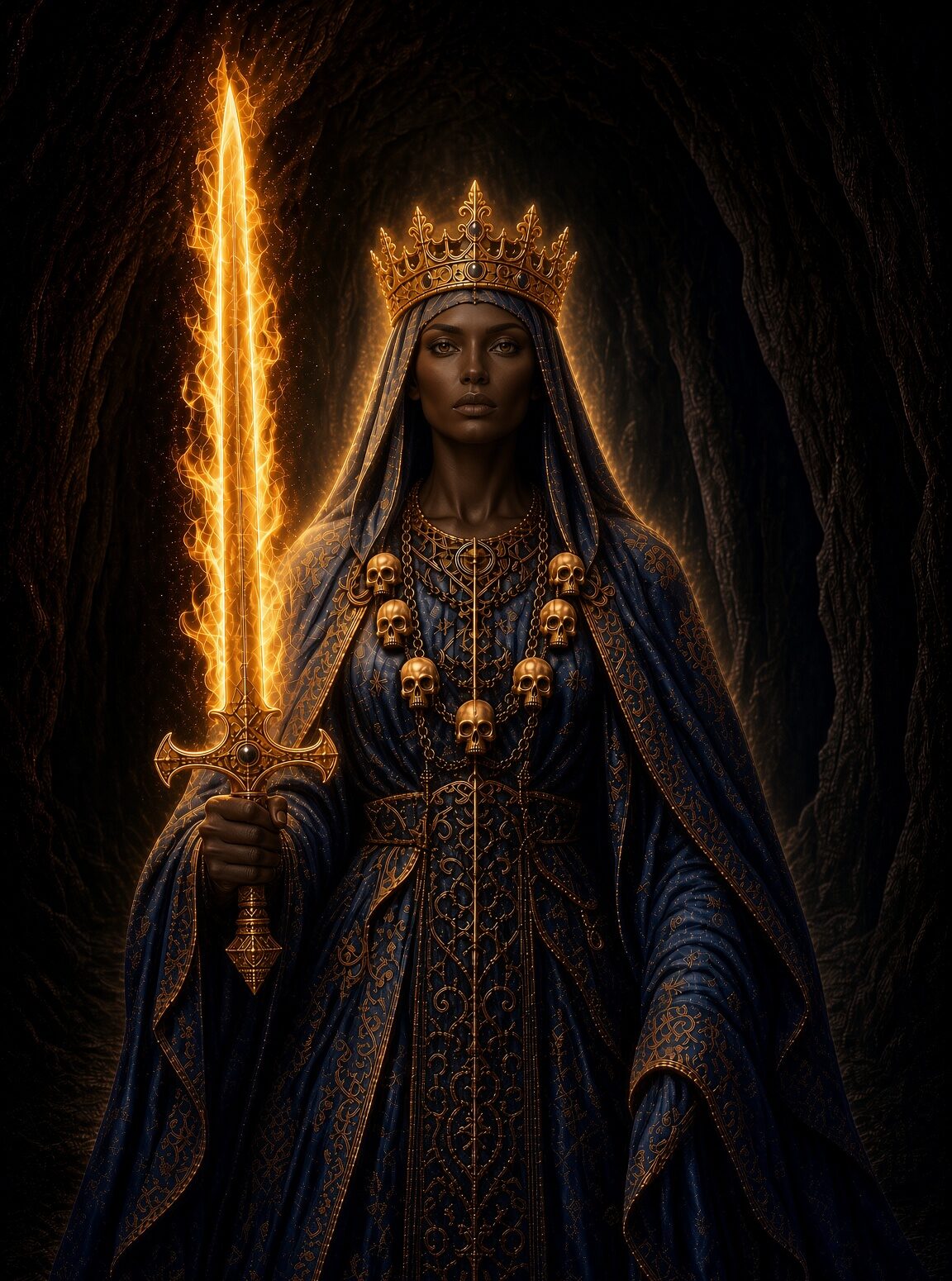


Nourished by the currents of the primal mother, bound to the comfort of home: only the painful break releases the boy into the freedom of manhood.
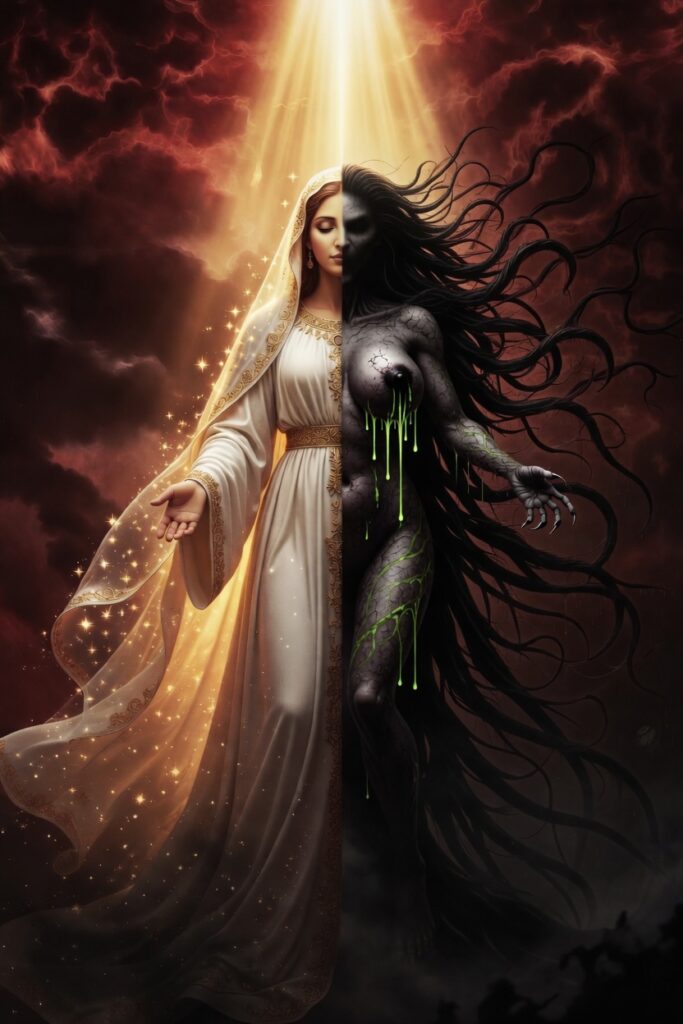
The Infinite Faces of the Magna Mater
In depth psychology, the Great Mother manifests in a vast, often paradoxical diversity. She encompasses the highest and the lowest, the saving and the destructive.
- The luminous, nurturing forms: She appears as the personal mother or grandmother, as a wet nurse or ancestress. In a higher, spiritual sense, she embodies the Goddess, the Virgin, the Mother of God (Mary), or wisdom beyond reason (Sophia). She is the object of all longing for redemption—symbolized by paradise, the Kingdom of God, the protective Church, home, the land, the earth, the garden, or the deep, living well. She is the site of magical transformation and rebirth.
- The dark, destructive forms (The Death Mother): Because every archetype is ambivalent, the Great Mother has a relentless flip side. She is the merciless goddess of fate, the witch, the terrifying nightmare (Lilith), or the all-devouring dragon. She symbolizes darkness, poison, the underworld, the abyss, the grave, and the deep waters. In India, she finds her historical parallel in the bloodthirsty, dancing goddess Kali.
Indian philosophy attributes three fundamental qualities to this primordial mother (Prakriti): benevolence, passion, and absolute darkness. She is the ultimate paradox—the loving and the terrifying mother at once.
The Numinous Drama - Why the Biological Mother Must Remain Human
The existential drama of the uninitiated human being begins in early childhood. Because the child's psyche is still unprotected, the child unconsciously projects this overwhelming, mythological background onto their real, personal mother.
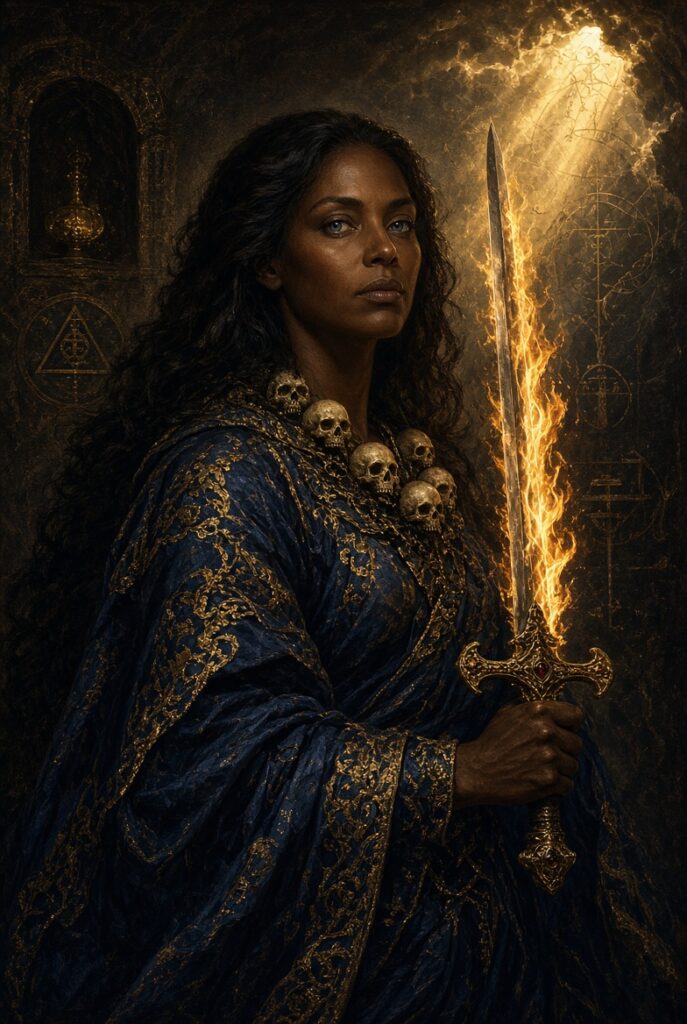
This is precisely where the fundamental, psychological necessity of a lived religion with its transcendent symbols (such as the Mother of God or the Black Madonna) lies: The religious symbols absorb the force of the archetype. They serve as a collective lightning rod. Religion helps children and us adults not to project the entire cosmic force of the archetype onto their own biological mother or father.
The Necessity of Religious Symbols
Only through religious symbols can one's own mother remain a completely normal human being. If these transpersonal, divine symbols are absent from the life of a culture, the biological, imperfect mother is inevitably overloaded with this gigantic, overpowering numinous authority. In the child's experience, she is elevated to the status of an infallible goddess or an all-powerful threat. This is an unnatural burden that would psychologically break any real woman—and makes it impossible for the child to see their mother as a fallible, independent human being and ever to break free from her in a healthy way.
When children suffer from infantile phobias and dream of witches, monsters, or man-eating animals, they are not, at their core, encountering their real mother—but rather the unfiltered, terrifying eruption of the terrible mother from the collective unconscious, because no religious symbol channels this energy.
Herein lies the fundamental psychological paradox: The mother protects the child from within. As long as the child is small, the image of the mother serves as a shield against inner evil, against the chaos of their own shadow self, and against the powers of darkness. But in adulthood, this very protection becomes a gilded cage. Those who do not break free remain forever trapped in the protective, but paralyzing and castrating orbit of the Great Mother.
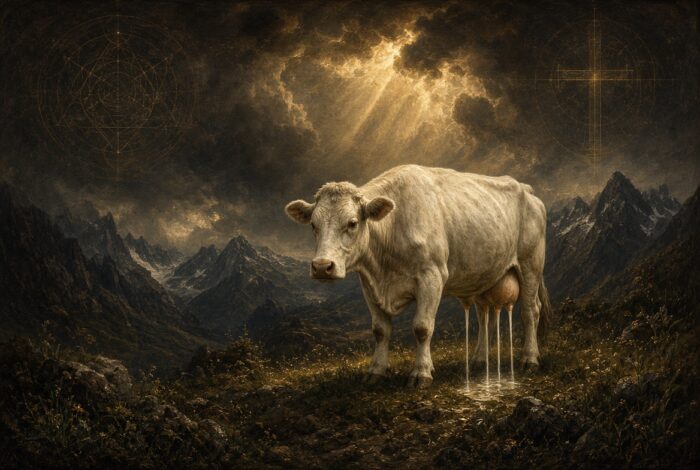
The Swiss Archetypal Symbol – The Primeval Cow Audhumbla
For us in Switzerland, this archetype has a very tangible, deeply rooted counterpart: the cow. In Germanic mythology, it is the primeval cow Audhumbla, the primal mother of all beings, from whose udders flowed four streams of milk, nourishing life itself. In our Swiss culture, the dairy cow is far more than a farm animal – it is the living, collective symbol of the nurturing, sustaining Great Mother par excellence. Without the cow, its milk, and the cultural landscape it shapes, our identity and our Alpine culture could not survive at their core. It embodies the absolute basis of our physical existence, the unconditional nourishment provided by our homeland, but also carries the psychological risk of remaining unconsciously and uninitiatedly entrenched in this rural, maternal comfort.