The Paradox of Koans in Zen: Sword and Bridge to the Unconscious
Dear brothers and sisters, the koans of Zen are living paradoxes that open a dialogue with the unconscious. They resemble active imagination and courageous conversation with the archetypes. Precisely because they shatter the mind, they become a bridge: they kill the one-sided consciousness and awaken the soul to the deeper life in the Logos. What follows is a consideration of this path in its emotional and spiritual depth - and the clarification that there is indeed a solution, but it is not found by reason or emotions.
The essence of the Koans
In the practice of Zen, the practitioner encounters the koan - that short, inextricable sentence or image that leaves no way out for logical thinking. “What does the sound of a single hand sound like?” or “What was your original face before your parents were born?” Such words are not games of the intellect. They are the sword that cuts through the dominance of the egoic mind. The mind that wants to grasp, order and control everything is faced with a wall. Exactly where he fails, the space for the unconscious opens up.
Active imagination and dialogue with the archetypes
This is the same process that the soul study C.G. Jung describes it as an active imagination. Not the passive drifting away in fantasies, but the conscious, responsible entry into the dialogue with the inner figures. The archetypes – those primordial images of the soul – emerge: the sage, the anima, the shadow, the great mother. People talk to them, hear them, let themselves be shaken and transformed by them. The unconscious does not respond in the language of ratio. It speaks in images, contradictions and paradoxes. That's why the path there must itself be paradoxical.
Neither reason nor emotion - only the heart finds the solution
Here it is important to clearly counter a common misunderstanding: There is a solution to the koans. They are not meant to remain unresolved forever. But neither the mind nor the emotions can solve them. The mind fails because of paradox because it can only think in opposites and concepts. The emotions - however vivid and powerful they may be - often remain in the realm of the personal, the desire or the defensive and also misfire. Only the heart, the soul itself, finds the solution. The heart here is not the sentimental world of feelings, but the place where the soul meets the self and the logos in its depth. The breakthrough happens where the opposites are no longer fought but supported. The solution is not an imagined answer or an emotional state - it is the transformation of the whole person. The Master recognizes them because he sees the fruit of inner maturity, not because a sentence has been correctly rendered.
The paradox as a bridge to the unconscious
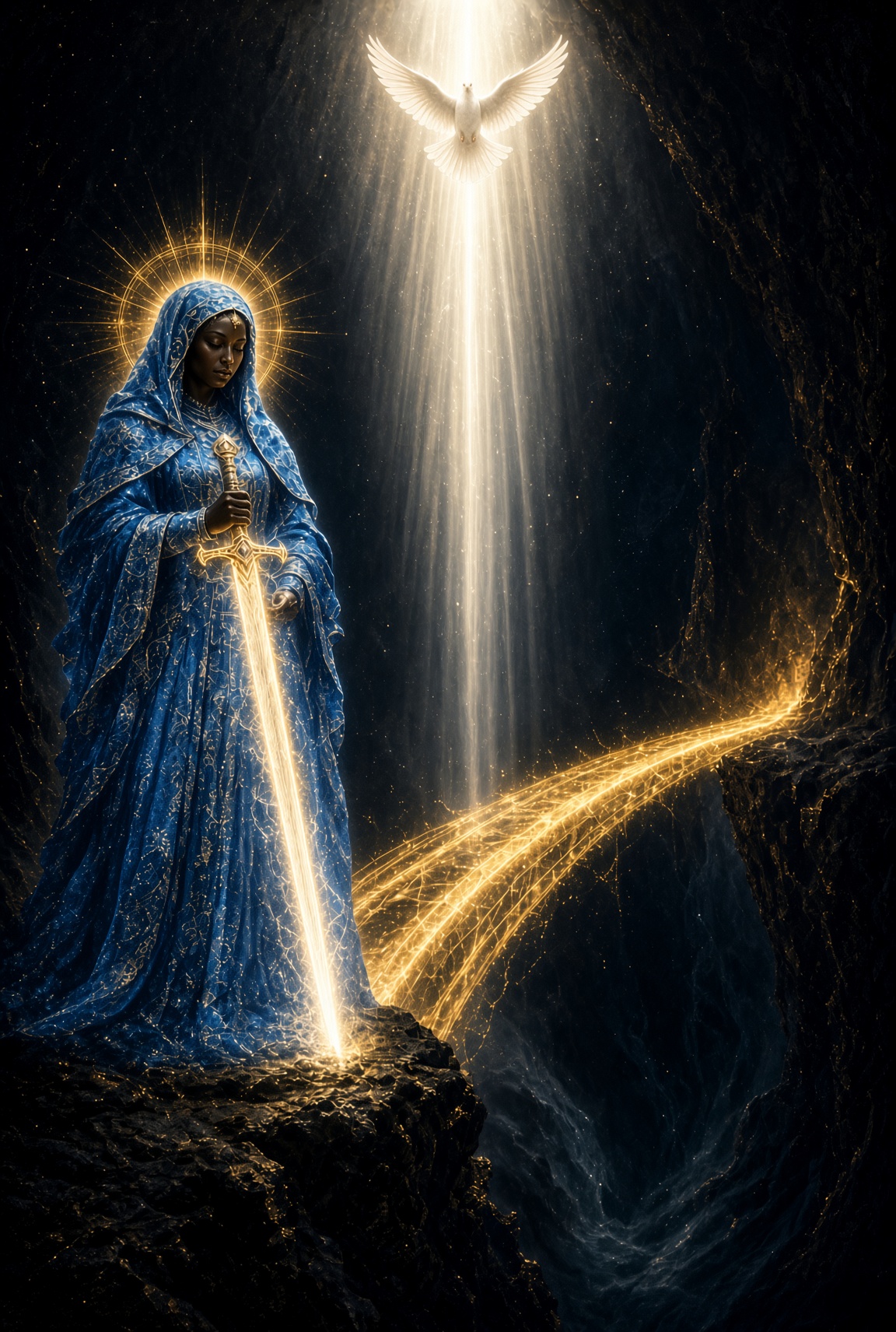
The paradox is the bridge because it breaks down the one-sidedness of consciousness. As long as a person remains only in the clear space of the mind or in the waves of emotions, the unconscious remains dark and unredeemed. The koans force us to turn back: away from the dominating self and towards a living encounter with what is greater. In this encounter, what alchemy calls nigredo occurs - the blackening, the death of the old self. But this death is also resurrection. The sword that kills awakens. The soul is liberated on the path of individuation: it finds its center, the self, and reorients itself to the Divine Logos, the symbolic Father, God in heaven.
The Black Madonna and the union of opposites
In this process, healthy femininity also appears. The Black Madonna, symbol of Sophia, the dark yet fruitful wisdom, leads people to the integration of the hidden. It itself has a paradoxical effect: it destroys you and brings you to the brink of death, only to then appear in human form and heal you. In its blackness it dissolves the old, tears down the false security and leads the soul into the night of the Nigredo. But it is precisely there, on the edge, that she transforms – not as a distant goddess, but in human proximity and warmth – and becomes a healer. It is not the sentimental or destructive anima, but the mature, earth-bound and at the same time heavenward-directed soul - the wisdom of the heart. In union with healthy masculinity - the clear, responsible, fatherly force - love emerges as completeness. Not the fusion that dissolves what is independent, but the holy marriage of opposites that makes people whole and leads them towards their Father in heaven.
The call of the Logos and the liberation of the soul
So the path of koans and active imagination becomes a religious act in the deepest sense. It is courage for the truth that humbles the mind and purifies the emotions to elevate the soul. He is optimistic because he knows: behind every darkness, light awaits. He is moral because he demands responsibility—human beings must neither flee from nor misuse the dialogue with the unconscious. He is rational in the higher sense because he acknowledges and transcends the limits of mere reason and the mere world of feelings without denying them.
Brothers and sisters, practice this dialogue. Whether in silent sitting before the koan, in contemplative reflection, in inner prayer, or in active imagination: let the paradox work its magic. Do not trust the intellect, nor the waves of emotion. Let the heart, the soul itself, find the solution. Let the sword of the Logos slay your old self, so that true life may be resurrected. The soul yearns for this conversion. It wants to be free, not by fleeing from the world, but by fully embracing its depths—and by turning to the Father, who is the light and in whom all opposites find their ultimate unity. Walk this path with earnestness and joy. The bridge is built. The unconscious awaits. The Logos calls.