Why Men Don’t Fear Death – and What This Reveals About the Soul
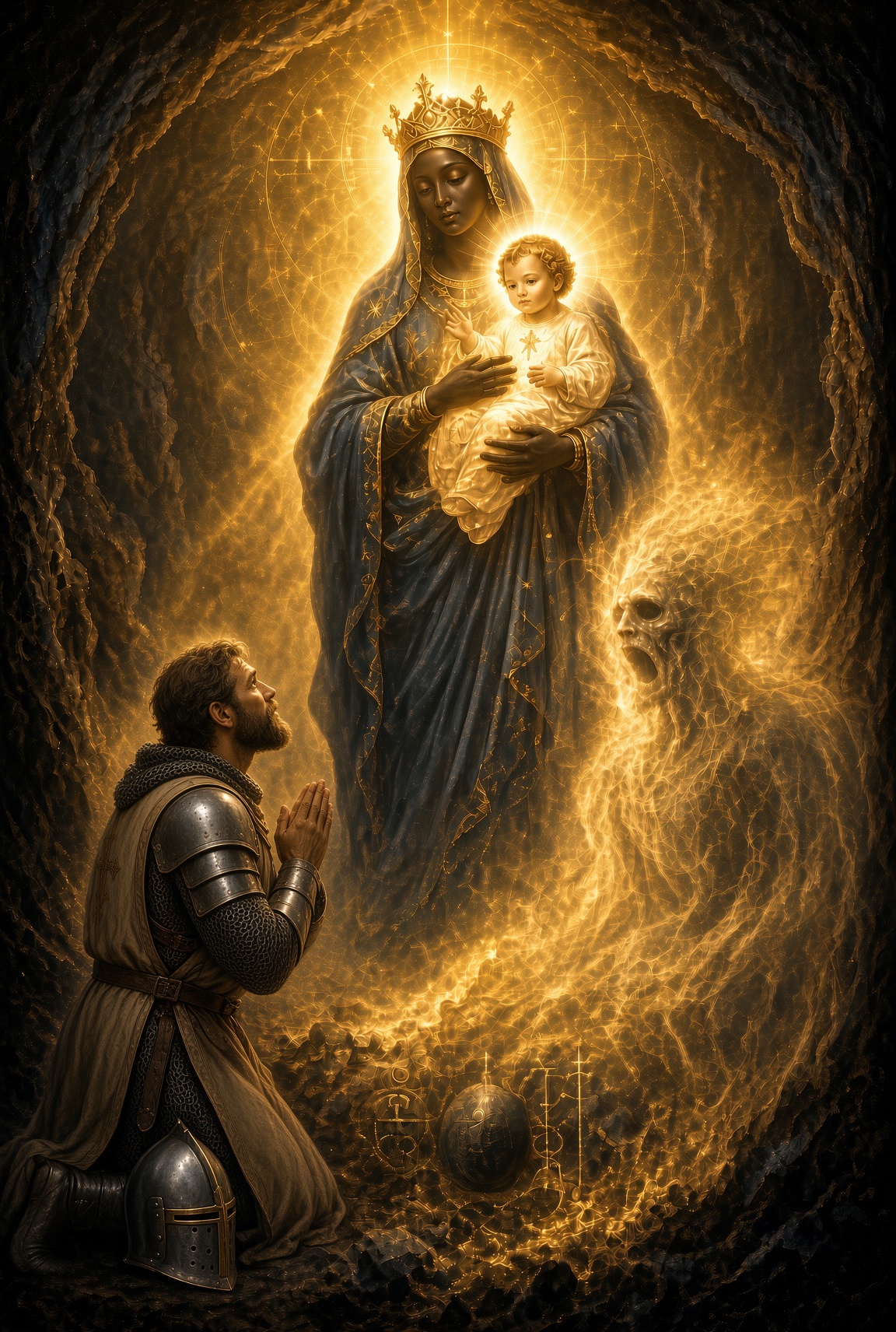
Dear brothers and sisters, a short, compelling testimony speaks of an ancient truth: men do not fear death to the extent one might assume. What they fear is something deeper – the loss of meaning, the separation from the Logos, the failure to fulfill the vocation laid upon them by the symbolic Father. In this reflection, we turn to the mystery of healthy masculinity, the rediscovery of the divine Logos, and the path of individuation that liberates the soul. The Black Madonna, symbol of Sophia and healthy femininity, stands as a luminous counterpart: only in the union of whole masculinity and whole femininity does the completeness of love arise. Overcoming death also means descending into the dark depths of the maternal, into matter itself – and confronting the Mother of Death in order to find the Black Madonna.
The Archetype of Man and Fearlessness in the Face of Death
Men carry within their archetype the readiness for sacrifice. Like the soldier who stands up for home and family, like the father who is consumed by his love for his loved ones, man is by nature oriented toward the higher things. Physical death does not appear to him as the most terrible enemy. This attitude is neither recklessness nor repression. It is the expression of a deeper order inherent in man: an orientation toward the Logos, toward truth, beauty, and goodness.
Inner Death as the True Enemy
More terrible than the end of the body is inner death: life without truth, without beauty, without goodness; life that denies the Logos and surrenders to relativistic night. Carl Gustav Jung taught that individuation is the path of the soul—the conscious integration of anima and animus, of light and shadow. The man who walks this path recognizes: the death of the body is transition, but the death of the soul is an abyss. He does not fear death, but rather the barren life that bears no fruit for eternity, that does not protect the family, that does not bear witness to the truth.
The Rediscovery of the Logos and the Sacrifice of Christ
This is revealed in the Christian mystery. Christ, the Logos himself, willingly went to his death, not out of fearlessness of pain, but out of love and obedience to the Father. “Greater love has no one than this, that someone lay down his life for his friends.” The healthy man senses this call. He fears turning his back on the symbolic Father and sinking into the orphan existence of modernity. The word of repentance, the sword that simultaneously kills and gives life, is: Return to the Father.
Confronting the Mother of Death to Find the Black Madonna
To truly overcome death means more than simply looking upward. It demands a descent into the dark depths of the maternal, into matter itself. Here, the soul encounters the Mother of Death—that archaic, devouring figure who embodies chaos, destruction, and the terrifying aspect of the primal mother. Only those who find the courage to confront this Mother of Death without fleeing or submitting to her can find the Black Madonna behind her dark veil. The Black Madonna is the transformed figure of Sophia: no longer the destructive mother, but the wise, fertile, redeeming depth. In the Nigredo, the black phase of transformation, the old must die. Only through this encounter is healthy femininity born—and only through it can masculinity receive its true strength.
Love as the union of healthy masculinity and healthy femininity
Love as the union of healthy masculinity and healthy femininity is not a romantic ideal, but a sacramental reality. It is the place where the Logos is rediscovered and the soul awakens. The family, with mother and father, remains the earthly temple of this truth. Here the soul practices love, here it learns to serve the Logos. Without this order, masculinity loses its consecration and femininity its depth.
The Path of Individuation and the Liberation of the Soul
In the mysticism of the Nigredo Monastery, the old dies so that the new may be born. Thus, in man, the fear of physical death dies as he dares to descend into the maternal depths and confronts the Mother of Death. The man who does not fear death because he knows of the higher realm and at the same time does not shy away from the maternal becomes capable of truly living. He becomes courageous, optimistic in the Christian sense: hopeful because he knows that death has been overcome—through the Logos and through Sophia, the Black Madonna.
Brothers and sisters, let us walk this path: courageously, rationally, and religiously in the deepest sense. Death loses its sting where the soul belongs to the father and at the same time in Descending into the dark depths of matter to encounter the Mother of Death and find the Black Madonna, even dying becomes an act of devotion – and life a preparation for eternity.